We wanted to share an important update on investigational regenerative approaches and alternatives in hair restoration.
Investigational Regenerative Approaches
Exosome-based therapies remain investigational. A 2024 review identified nine clinical studies involving 125 patients, but the overall human evidence base is small and heterogeneous. Importantly, there are currently no FDA-approved exosome products; any discussion should reflect the investigational status, product variability, and need for appropriately controlled clinical research. Clinical review of exosome studies · FDA safety notification on exosome products
PP405 is an investigational topical small molecule designed to reactivate dormant hair-follicle stem cells through metabolic signaling rather than androgen suppression. In company-reported Phase 2a findings, 31% of men with more advanced loss achieved a greater than 20% increase in hair density at eight weeks versus 0% with placebo. These early findings are promising but should be interpreted as preliminary pending peer-reviewed publication and confirmatory Phase 3 results. Phase 2a report on PP405[dermatologytimes]
Saw Palmetto as an Alternative
For patients who decline or cannot tolerate finasteride, Serenoa repens (saw palmetto) may be a discussion point, with the important caveat that its evidence base is substantially less robust than that for FDA-approved therapies. A systematic review identified five RCTs and two prospective cohort studies of saw-palmetto-containing products, with generally favorable but heterogeneous results; standardized preparations and realistic counseling are essential. Systematic review: saw palmetto in hair loss
Take the Next Step With HPI Hair Partners
If you have questions about emerging hair therapies or want to review your current treatment plan based on the latest clinical evidence, we’re here to help.
Book Your Consultation today to receive a personalized evaluation and discover the best approach to protecting and restoring your hair.
We wanted to share a brief update on emerging therapeutic developments in androgenetic alopecia (AGA).
Emerging Therapies in Androgenetic Alopecia
For more than three decades, treatment strategies for AGA have largely centered on minoxidil and antiandrogen therapies (finasteride, dutasteride, spironolactone). These remain foundational and evidence-based options. However, recent literature reflects a significant expansion in the therapeutic pipeline.
A 2026 review published in Expert Opinion on Pharmacotherapy highlights multiple investigational approaches that move beyond traditional DHT-focused mechanisms. As the authors note, “for 30 years, everything has been far too focused on DHT,” and current research reflects a broader exploration of follicular biology.
KEY AREAS OF INVESTIGATION INCLUDE:
🎯 Androgen receptor targeting: Topical clascoterone functions as an androgen receptor antagonist, while GT20029 promotes receptor degradation, effectively removing the binding target for DHT.
⚖️ Novel hormonal pathways: Agents such as HMI-115 are evaluating prolactin signaling as a potential modulator of hair growth.
🌱 Follicular stem cell activation: Compounds like PP405 aim to “activate resting follicle stem cells,” with the goal of reinitiating hair production rather than solely slowing miniaturization.
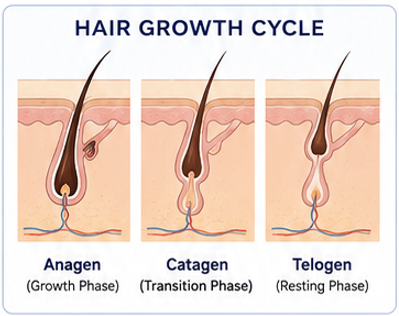
💉 Regenerative injectables: Therapies such as AMP-303 are being developed to induce transition into the anagen phase.
🔬 Cellular and metabolic targets: Additional research is exploring mitochondrial metabolism, thyroid signaling, potassium channels, and aging-related pathways, including agents like metformin and rapamycin.
“This evolving landscape reflects a shift from exclusively suppressing androgen activity toward attempting to “restore healthier follicle biology.”
📋 It is important to emphasize that many of these therapies remain in clinical trial phases, and outcomes will vary as data matures.
📊 Continued reliance on well-designed clinical studies will be critical in determining their eventual role in practice.
👥 We will continue to monitor these developments and evaluate their clinical applicability as evidence emerges.
Please reach out if our Trichology team can be of assistance with your alopecia patients and co-management opportunities.
Take the Next Step With HPI Hair Partners
Book Your Consultation today to learn more about co-management opportunities or to evaluate options for your patients.
https://hpihairpartners.com/wp-content/uploads/2026/07/6a5f1c22bc0b1f5d2e1a4d69.webp8871774Kimberly Vaughnhttps://hpihairpartners.com/wp-content/uploads/2025/09/hpihairlogo_300px.pngKimberly Vaughn2026-07-30 05:21:022026-07-31 07:16:48Emerging Therapies in Androgenetic Alopecia
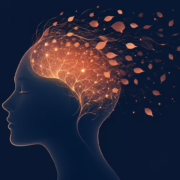
We wanted to share an important new research study that helps explain something many of our patients have experienced: hair loss after stress.
New Research: How Stress Impacts Hair Follicles and the Immune System
A recent paper published in the journal Cell explored how stress may affect the hair follicle and immune system. Here’s what they found—in simple terms:
A single stressful event can actually damage hair follicles at a cellular level.
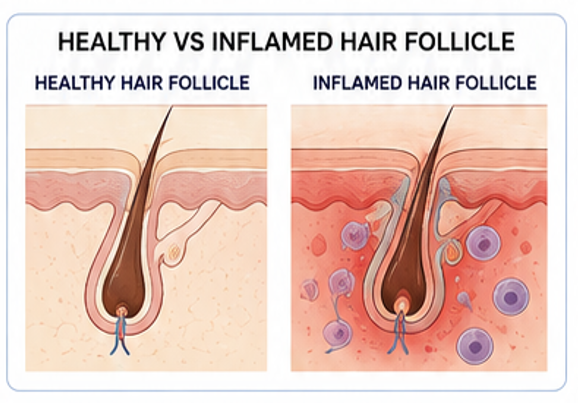
This damage can activate the immune system.
Even after hair grows back, the immune system may stay “on alert” and react again later.
What Does This Mean for You?
One of the most important takeaways from the study notes that stress-induced damage can activate immune cells that cause issues later down the road. We’ve always known that stress can trigger conditions like Telogen effluvium (shedding) and Alopecia areata (autoimmune hair loss), but this study helps explain exactly how that happens.
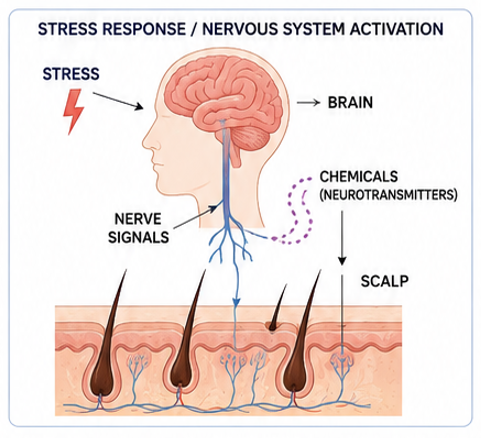
The researchers found that stress causes a surge in nerve signals that release certain chemicals into the scalp. This can lead to injury to growing hair follicle cells, inflammation, and the activation of immune cells that may later attack the follicle.
“A single acute stress event can prime the immune system for future hair follicle attack.”
In other words, even if your hair regrows after a stressful time, your body may be more sensitive to future triggers like illness, inflammation, or additional stress.
Why This Matters for Your Treatment
This research reinforces why we take a comprehensive approach to hair health at HPI Hair Partners. Effective long-term recovery requires reducing inflammation, supporting immune balance, addressing internal and external stressors, and protecting the follicle environment.
Hair loss is rarely caused by just one thing—and stress can play a much bigger role than it appears on the surface.
Take the Next Step With HPI Hair Partners
If you have questions about your hair or want to review your current treatment plan based on this new science, we’re here to help.
Book Your Consultation today to receive a personalized evaluation and discover the best approach to protecting and restoring your hair.
https://hpihairpartners.com/wp-content/uploads/2026/07/How-Stress-May-Trigger-Hair-Loss-And-Why-It-Matters.avif9411672Kimberly Vaughnhttps://hpihairpartners.com/wp-content/uploads/2025/09/hpihairlogo_300px.pngKimberly Vaughn2026-07-17 05:36:062026-07-17 05:36:06How Stress May Trigger Hair Loss (And Why It Matters)
Understanding what’s happening in your body and what you can do next.
Why GLP-1 Medications May Be Causing Hair Loss
If you’ve recently started taking a GLP-1 medication and noticed changes in your hair, you’re not alone. Many individuals experience increased shedding or thinning, and it can feel unexpected, especially when you’re focused on improving your overall health.
Here’s What’s Happening
GLP-1 medications work by slowing digestion and reducing appetite, which can lead to rapid weight loss. While this can be beneficial in many ways, it may also place stress on the body.
When the body experiences this kind of internal shift, it can redirect energy away from functions like hair growth. This can push more hair into the shedding phase, leading to noticeable thinning over time.
In addition, reduced calorie intake and potential nutrient deficiencies can further impact the health of your hair and scalp. The important thing to understand is that this is not just about hair.
Your Body Is Responding to Change
The important thing to understand is that this is not just about hair. It’s about how your body is responding to change. And more importantly, it can be supported.
At HPI Hair Partners, we take a personalized, science-based approach to understanding what your body needs during these transitions.
We look at the full picture and guide you with clear, realistic next steps. If you’ve been noticing changes and want clarity on what’s happening and how to support your hair moving forward, we’re here to help.
Take the Next Step With HPI Hair Partners
This is not about quick fixes. It’s about understanding your body and making the right adjustments for long-term results.
Book Your Consultation today to receive a personalized evaluation and discover the best approach to protecting and restoring your hair while supporting your overall health.
https://hpihairpartners.com/wp-content/uploads/2026/06/Why-GLP-1-Medications-May-Be-Causing-Hair-Loss-Noticing-Hair-Changes-on-GLP-1.avif10241536Kimberly Vaughnhttps://hpihairpartners.com/wp-content/uploads/2025/09/hpihairlogo_300px.pngKimberly Vaughn2026-06-30 06:11:342026-08-04 05:57:12Why GLP-1 Medications May Be Causing Hair Loss
2026 is the year to take charge of your hair health by staying informed about hair loss trends. Forget outdated solutions — hair restoration is being transformed by science, innovation, and real hope. With game-changing regenerative therapies and smarter, more personalized treatments, you have the tools to reclaim your confidence. Now is the time to embrace the latest breakthroughs and achieve results that once seemed out of reach.
Hair Loss Trends Explained: Modern Strategies and Treatments
Hair loss trends in 2026 are all about action and results. Rapid advances in medical science and technology mean you don’t have to settle for one-size-fits-all solutions. With more options than ever, from proven medications to cutting-edge regenerative breakthroughs, you can chart a personalized path that delivers real, lasting outcomes.
Regenerative Therapies: Exosomes, Stem Cells, and More
Regenerative therapies have quickly become the talk of 2026, with a focus on harnessing the body’s own biological mechanisms for hair regrowth.Exosomes, in particular, deliver growth factors and reduce inflammation, often leading to visible improvements within a few months and minimal recovery time. Early studies highlight the promise of exosome therapy for fast, lasting results.Stem cell therapies and innovative combinations are also expanding options for those seeking follicle regeneration.
HPIHair Partners is leading the way by combining Wharton’s Jelly stem cell therapy with low-level laser therapy or microneedling. This approach is delivering 25–40% improvements in hair density in trials, making it an exciting option for those interested in follicle regeneration. Advanced PRP/PRF and fatty acid treatments are also evolving, though their results are less predictable and remain under clinical validation.
Comparing Regenerative Therapies and New Pharmaceuticals
Exosome-based treatments, particularly those derived from mesenchymal stem cells, have set a new standard for the speed and durability of results. Autologous cell therapies, using a patient’s own biological material, are valued for their safety and natural appeal but are best viewed as complementary to newer pharmaceutical options. These regenerative approaches may become increasingly important as part of comprehensive hair restoration plans, especially when combined with the latest drug therapies.
Pipeline drugs such as clascoterone and PP405 are also changing the landscape, showing large, measurable density gains in clinical trials. If approved, these medications are expected to become foundational to hair restoration, with regenerative therapies like exosomes and autologous cell treatments potentially layered on top for even greater results.
Proactive Scalp Care and Combination Medications
Optimal hair health begins with a proactive approach. In 2026,scalp and wellness therapies go beyond basic care, targeting the underlying causes of thinning and breakage. Combination topical and oral medications, such as minoxidil/finasteride blends, remain core options and are now enhanced by personalized, multi-ingredient compounds. Oral minoxidil, in particular, is gaining popularity for its systemic benefits, promoting hair growth in a broader range of patients. The HPIHair Partners approach includes thorough scalp health assessments, customized treatment plans, and supportive therapies, all designed to maximize outcomes and encourage regrowth.
Commit to your regimen and track your progress — consistency is everything. Schedule regular follow-ups with your hair restoration provider to address side effects, monitor results, and fine-tune your plan. Enhance your daily hair care routine by using gentle washing techniques and high-quality products, and by avoiding excessive heat or harsh chemicals. These steps help protect and strengthen new hair growth.
While adopting the latest therapies is crucial, paying attention to ongoing care can make a measurable difference in your results. Tracking changes in hair density and quality, whether through photos or professional analysis, enables you and your provider to adjust your strategy more effectively. Many people find that combining medical treatments with supportive habits such as scalp massages or nutritional supplements, as recommended by a provider, can amplify progress.
Being aware of the components in your hair care products and understanding how they complement your routine can help you avoid unnecessary obstacles. As scientific findings advance, there is increasing recognition that lifestyle habits, such as managing stress, ensuring quality sleep, and maintaining a nutritious diet, influence hair vitality. By making these factors a core part of your regimen, you’ll enhance the effectiveness of both traditional and innovative therapies, paving the way for lasting, positive results.
Leading-Edge Drugs and Biologics: What’s Coming Next
Clascoterone and PP405 are among the most anticipated hair loss treatments for 2026, as both are showing large, quantifiable density gains in controlled trials. Clascoterone offers a new way to block the effects of androgens on hair follicles, while PP405 is designed to stimulate hair follicle stem cells with a novel mechanism.
Alongside these, Breezula is a topical androgen receptor blocker expected to seek approval in 2026 and may offer a new approach for both men and women with androgenetic alopecia. Rezpegaldesleukin, a biologic that targets the IL-2 pathway, is also generating significant interest due to promising trial results for severe alopecia areata. If these drugs are approved, they are expected to become powerful baselines that can be combined with regenerative therapies as part of comprehensive treatment strategies.
How To Choose the Right Approach in 2026
Your hair is unique, so your treatment should be too. Get a professional assessment to understand your hair loss profile, then choose therapies tailored to your goals. Whether you’re drawn to regenerative treatments, breakthrough pharmaceuticals, or proactive scalp care, staying informed means you can act quickly and get the best possible results.
Take the Next Step With HPIHair Partners
HPIHair Partners, located in Nashville is your partner for the most advanced hair loss solutions in 2026. Our experts blend proven therapies with the newest breakthroughs to build a personalized plan just for you. Whether you’re curious about regenerative treatments, proactive scalp care, or the latest drug innovations, we’ll guide you every step of the way. Take control of your hair’s future.Contact us today to schedule your personalized consultation and start your transformation.
https://hpihairpartners.com/wp-content/uploads/2026/02/hair-loss-trends-2026.jpg12001800hpi-marketinghttps://hpihairpartners.com/wp-content/uploads/2025/09/hpihairlogo_300px.pnghpi-marketing2026-02-21 11:27:092026-02-21 11:28:10The Latest Hair Loss Trends and Breakthroughs for 2026
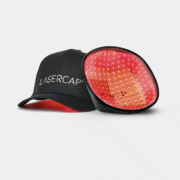
https://hpihairpartners.com/wp-content/uploads/2026/02/Products_LaserCap-HD.webp713713hpi-marketinghttps://hpihairpartners.com/wp-content/uploads/2025/09/hpihairlogo_300px.pnghpi-marketing2026-02-07 11:42:312026-02-09 16:27:49Which Laser Device is The Best
Losing hair can be upsetting for many women, and figuring out the cause is the first step towards finding a solution. One hidden cause might be Polycystic Ovary Syndrome (PCOS), a health condition that affects a lot of women and often goes unnoticed, even though it can lead to hair loss. This can show up as hair thinning across the scalp or more hair loss at the hairline and temples, similar to patterns seen in men.
To determine if PCOS is the reason for hair loss, a detailed medical check-up is needed. Dr. Jack Monaco from The Nashville Hormone & Integrative Medicine Center points out that a careful diagnosis is crucial. This might include more than the usual exams because the ovarian cysts that signal PCOS might not be easy to feel.
PCOS doesn’t just cause hair loss. It can also lead to unwanted hair growth on the body, changes in menstrual cycles, acne, weight gain, difficulty having children, and dark patches on the skin. It’s also linked to other health issues like diabetes and thyroid problems.
Diagnosing PCOS Requires Several Steps
Diagnosing PCOS accurately involves a variety of tests. These tests can look for ovarian cysts using ultrasound, check hormone levels in the blood, and identify signs of health issues like elevated testosterone, thyroid problems, adrenal gland disorders, or insulin resistance. Dr. Monaco recommends thorough blood testing and a pelvic ultrasound for a clear diagnosis.
Key tests might include:
A testosterone level test.
A full check of thyroid function.
A test for adrenal gland function.
Tests for diabetes and pre-diabetes.
An analysis of gut health.
Managing PCOS and Its Symptoms
While PCOS can’t be cured, its symptoms can be managed with various treatments. Medications like Berberine, Metformin, and Inositol can help control blood sugar and insulin levels. Birth control pills may be used to manage hormonal imbalances. If someone has diabetes or a thyroid condition, those will need their own treatments.
For hair loss, the goal is to improve scalp health and hair growth while balancing hormones to reduce unwanted hair growth. Diet and exercise are also key in managing PCOS, with a focus on personalized nutrition advice.
Seeking Specialized Care for PCOS and Hair Loss
When dealing with hair loss due to PCOS, consulting with a healthcare provider familiar with PCOS is essential. They can offer a comprehensive care plan tailored to your specific needs. A Certified Trichologist can also provide specialized advice for managing hair loss and excessive hair growth.
Understanding PCOS deeply is crucial in tackling hair loss effectively. The right diagnosis and treatment plan can improve hair health and overall well-being. Taking the first step by consulting with specialists at HPIHair Partners can guide you toward regaining your hair health and confidence.
We at HPIHair Partners are ready to support you through your hair restoration journey with advanced diagnostics and compassionate care. If you have concerns about hair loss, contact us for a personal consultation.
https://hpihairpartners.com/wp-content/uploads/2024/02/Smiling-Women-Group.jpg50667823hpi-marketinghttps://hpihairpartners.com/wp-content/uploads/2025/09/hpihairlogo_300px.pnghpi-marketing2024-12-29 22:40:192025-10-11 09:44:49Is PCOS the Hidden Factor in Your Hair Loss Journey?
Hormones are like tiny messengers in our body that help everything work right, including ensuring our hair grows healthy and strong. But sometimes, these messengers don’t send the right signals, which can make our hair thin or fall out. This article talks about why this happens and what we can do to help our hair.
Why Hormones Matter for Your Hair
Our body has a system for sending messages with over 50 different hormones. They help control everything from how we grow to how we feel and even how our hair looks. When these hormones aren’t balanced just right, it can make our hair fall out. This is a big reason why some people come to doctors for help with their hair loss.
The Main Hormones That Affect Your Hair
Testosterone: This hormone is a bit tricky because it can make hair grow in some places but cause it to fall out on your head. As men get older, they make less testosterone, which can lead to hair loss and other changes like feeling less strong or happy. Sometimes, trying to add more testosterone can actually make the hair loss worse because it can shrink hair follicles.
Estrogen and Progesterone: These hormones help women’s hair grow thick and strong. But during menopause, hair can start to thin when these hormone levels go down. This doesn’t usually cause bald spots but might make the hair less full over time. An increase in testosterone during this time can also make hair loss worse and cause more hair to grow on the face.
Knowing how these hormones work helps doctors find the best way to treat hair loss for both men and women.
Spotting and Fixing Hormone-Related Hair Loss
Realizing you’re losing hair because of hormones isn’t always obvious. It usually happens slowly, with more hair falling out over time. A skin doctor or hair specialist can check your scalp and maybe even take a small sample to figure out exactly what’s going on.
Finding the Cause
To really understand why you’re losing hair, doctors look at everything – not just your hormones but also your diet, if your scalp is healthy, and if you have any diseases that affect your hair.
Ways to Help Your Hair
Eating Right: Foods full of vitamins and minerals can help your hair grow. Sometimes, you might need extra vitamins to help your hair.
Medicine: Some medicines can help balance your hormones or make your hair grow back.
Hormone Therapy: If menopause or other hormone changes are making your hair thin, there’s a gentle way to help balance these hormones.
Laser Therapy: A special light treatment can help strengthen your hair follicles and grow new hair.
Taking Care of Your Hair: Using gentle hair products and not treating your hair too harshly can also help.
Taking Charge of Your Hair Health
Losing hair because of hormone changes can be frustrating, but with the right help, you can work on getting your hair and health back in good shape. If you’re worried about your hair, talking to a hair loss expert is a great first step.
Don’t let hair loss control your life. Reach out for help and start your journey to getting your hair back to being healthy and full.
https://hpihairpartners.com/wp-content/uploads/2024/02/Smiling-Women-Group-1-scaled-1.jpg17092560hpi-marketinghttps://hpihairpartners.com/wp-content/uploads/2025/09/hpihairlogo_300px.pnghpi-marketing2024-12-29 22:40:192025-10-11 09:44:49Understanding the Role of Hormonal Imbalances in Hair Loss
Hair loss is a common problem, and sometimes, the reason behind it is a tiny gland in your neck called the thyroid. This gland might be small, but it has a huge job: it controls how your body uses energy. This job is super important because it affects many things, including how your hair grows. A lot of people in the United States have issues with their thyroid, and these problems can lead to hair loss. This article aims to explain how your thyroid gland’s health is linked to your hair’s health.
Why the Thyroid Is Important for Hair
The thyroid gland sits at the front of your neck and plays a big role in your body’s energy use. According to Dr. Lynn N. Ellington, an expert in women’s health, the thyroid’s main job is to manage your metabolic rate. This means it controls how fast your body turns food into energy. This energy is crucial for all your body’s cells, including the ones that make hair grow and stay attached to your head.
How Thyroid Issues Affect Your Hair
Thyroid problems can either make the gland too active (hyperthyroidism) or not active enough (hypothyroidism). Both conditions can mess with the balance of hormones in your body, which can cause hair loss. It doesn’t matter if your thyroid is in overdrive or taking a nap; either way, it can lead to your hair falling out.
Diagnosing Hair Loss Due to Thyroid Problems
To figure out if your hair loss is because of thyroid issues, doctors need to do a bunch of blood tests to check various hormone levels. Sometimes, people don’t get all the tests they need because of insurance problems or other reasons. This can make it hard to find out for sure if the thyroid is the reason for the hair loss.
The Role of Diet and Nutrition in Thyroid Function and Hair Loss
What you eat can have a big effect on both your thyroid and your hair. Not getting enough of certain nutrients or getting too much of others can contribute to hair loss. For example, not having enough Vitamin B12, Vitamin D, Iron, or Zinc can make it harder for your hair to grow and stay healthy. Eating a balanced diet helps your thyroid work right, which can help keep your hair from falling out.
Understanding the Whole Picture
Everything from the health of your thyroid, to what you eat to the vitamins and minerals in your body works together to affect your hair. If you notice more hair on your brush or in the shower drain, it might be time to check in with a doctor. They can help figure out if your thyroid is the problem and what you can do to get your hair and health back on track.
https://hpihairpartners.com/wp-content/uploads/2024/02/Thyroid-health-lymph-nodes-scaled-1.jpg16742560hpi-marketinghttps://hpihairpartners.com/wp-content/uploads/2025/09/hpihairlogo_300px.pnghpi-marketing2024-12-29 22:40:192025-10-11 09:44:49Unraveling the Mystery of Hair Loss and Thyroid Health