Why do we see increased loss particular times of the year?
Is your skin dryer in cooler months?
Is your scalp more sensitive in the fall and itchy in the spring and summer?
Seasonal hair loss is REAL. Like seasonal allergies, our bodies (and hair follicles alike) are trying to fight off allergens created by temperatures, blooming tress, and more.
Increases in hair loss at particular times of the year is not an exact science, however it appears that women suffer from this condition much more than men. Without a direct link to temperature changes, research has identified that as environment changes occur, our bodies change. During more severe cold or warm temperature changes our skin can dry or become oily.
Ah-ha……the hair is a cellular living structure during the anagen/growing phase just as our skin is always producing and shedding! Just as our skin stresses each season, so will our hair.
What can you do?
Check with your hair loss specialist to determine the “actual” cause of the hair loss first. If you are in a stage of reactive (telogen/anagen effluvium) hair loss, take a deep breath, and seek a specialist to help with a short-term aggressive treatment plan to control the shedding and help your hair follicles rebound at a faster than normal rate. This shedding phase is more aggressive than your normal rate of hair loss thus, you will benefit from an aggressive treatment plan.
After determining the cause, treatment should be planned accordingly. Minoxidil and Finasteride are Food and Drug Administration- (FDA) approved medical treatments for genetic hair loss. However, consider more natural treatments such as customized IV Hair Health treatments, scalp injections, stimulating scalp treatments and micro needling procedures are also among treatment options. If you are suffering from nutritional deficiencies, treatment will comprise of supplements, and IV therapy. If your hair loss is more complex and due to hormonal disorders such as PCOS or thyroid, you’ll likely be referred to an endocrinologist to fix the root cause and it may take longer to see results.
https://hpihairpartners.com/wp-content/uploads/2021/11/Seasonal-Hair-Shedding-Loss.jpg6701000hpi-marketinghttps://hpihairpartners.com/wp-content/uploads/2025/09/hpihairlogo_300px.pnghpi-marketing2021-11-10 17:40:132026-01-07 14:32:15Why Do I Lose More Hair in the Fall?
Hair loss can be devastating for both men and women, it can impact their confidence and social skills. AGA – Androgenic Alopecia is the most common type of hair loss disorder across both sexes. Large percentages of 50-75% of men and women are affected by AGA as they age, 40 and over[1–3]. However, there is hope for those dealing with hair loss!
How Does Low-Level Laser Therapy (LLLT) Work?
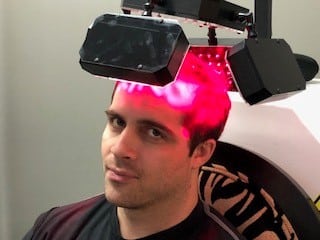
LLLT is an approved treatment by the Food and Drug Administration (FDA), known to help increase blood circulation to the hair follicles [6]. Laser therapy has demonstrated proliferative effects in a variety of tissues and cell types, including hair follicles [7]. LLLT induces proliferation, migration, oxygenation, anti-inflammation, adhesion and transition of hair follicles from telogen (non-growing) to anagen (growing). All studies including LLLT found significantly more dense hair following treatment protocols. SUCRA (surface under the cumulative ranking) scores proved Low-Level Laser Therapy to be one of the most effective hair growth treatments, followed by scalp injections, finasteride and minoxidil [7–8].
Low-Level Laser Therapy is increasing hair density and promoting growth in both men and women, protocols are assigned by their providers. Higher quality laser devices are available in professional offices and there are also at-home devices readily available to the consumer. We suggest you still see a provider to determine the best treatment laser & treatment protocol for your individual hair loss needs.
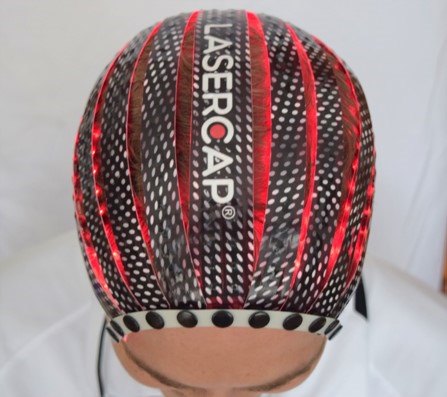
Hands-free operation allows the user to carry out other tasks during treatment
Suggested at home use is 30 minutes every other day
References
Rousso DE, Kim SW (2014) A review of medical and surgical treatment options for androgenetic alopecia. JAMA Facial Plast Surg 16(6):444–450. https://doi.org/10.1001/jamafacial.2014.316
Delaney SW, Zhang P (2018) Systematic review of low-level laser therapy for adult androgenic alopecia. J Cosmet Laser Ther 20(4): 229–236. https://doi.org/10.1080/14764172.2017.1400170
Afifi L, Maranda EL, Zarei M, Delcanto GM, Falto-Aizpurua L, Kluijfhout WP, Jimenez JJ (2017) Low-level laser therapy as a treatment for androgenetic alopecia. Lasers Surg Med 49(1):27–39. https://doi.org/10.1002/lsm.22512
Kalia S, Lui H (2013) Utilizing electromagnetic radiation for hair growth: a critical review of phototrichogenesis. Dermatol Clin 31(1):193–200. https://doi.org/10.1016/j.det.2012.08.018
Gupta AK, Foley KA (2017) A critical assessment of the evidence for low-level laser therapy in the treatment of hair loss. Dermatol Surg 43(2):188–197. https://doi.org/10.1097/DSS.0000000000000904
Gupta AK, Mays RR, Dotzert MS, Versteeg SG, Shear NH, Piguet V (2018) Efficacy of non-surgical treatments for androgenetic alopecia: a systematic review and network meta-analysis. J Eur Acad Dermatol Venereol. https://doi.org/10.1111/jdv.15081
Adil A, Godwin M (2017) The effectiveness of treatments for androgenetic alopecia: a systematic review and meta-analysis. J Am Acad Dermatol 77(1):136–141.e135. https://doi.org/10.1016/j.jaad.2017.02.054
de Freitas LF, Hamblin MR (2016) Proposed mechanisms of photobiomodulation or low-level light therapy. IEEE J Sel Top Quantum Electron 22(3). https://doi.org/10.1109/JSTQE.2016.2561201
Expecting a baby can be one of the most exciting (and scary) things you can experience in life. Along with the life changes, come the changes your body encounters. Some changes are good like that pregnancy glow and thicker hair. Some changes can be difficult like struggling with morning sickness and an ever-changing body image.
As a medical professional, when it comes to myself it’s like all medical knowledge goes out the window. I found myself researching about what changes I could expect from pregnancy even though I counseled pregnant women all the time about expectations. The problem is that no two pregnancies are the same. Because of that, I thought certain things didn’t apply to me, like the post-partum hair fallout.
As my pregnancy months grew I started to notice how thick my hair had gotten. I’ve had fine hair most of my life, so I loved my new found thickness. My sisters and friends had told me enjoy it while it lasts because after baby arrives the hair will fall out. I thought I was ready for what was to come. Boy, was I wrong.
I remember standing in the shower one morning thinking to myself my hair must not going to be fall out like it had for others. It’d been three months and I still had my thick hair. It was that next week when I was combing my hair and I couldn’t believe how much hair was in my comb. And it was only getting worse. When I was asked how much I was loosing, I couldn’t even say. It was handfuls and handfuls. It was shocking to see that much hair fall out. I wondered how much would I lose and when it would stop. If it would stop. And now, it all makes sense. Because of the hair cycle, shedding often does not occur until around 90 days post partum.
My shedding did slow down, but I was also proactive about the process. That’s the key: to be proactive. The minute my hair started shedding I started professional laser treatments 2-3 times per week. If you are experiencing post partum hair loss you are not alone. Here at HPIHair, we understand how hair loss can affect you and we have several tools to help slow your shedding and reverse your hair loss.
If you are experiencing post partum hair loss contact us today at 615.662.8722.
https://hpihairpartners.com/wp-content/uploads/2018/03/Neuweg-29e-scaled-1.jpg18292560hpi-marketinghttps://hpihairpartners.com/wp-content/uploads/2025/09/hpihairlogo_300px.pnghpi-marketing2019-01-01 11:41:442026-01-17 15:07:45Post Partum Hair Loss: A Personal Story
Our four seasons of Hair Loss: Winter, Spring, Summer and Autumn.
For most of the world, these seasons bring about change outside, whether it in the temperature or other elements in nature.
At times these transformations are welcome, while at other times we wish they’d never take place. Seasonal Hair loss is the latter of those two emotions, similar to the ten inches of rain, constant icing of the roads, or scorching temperatures.
What is it about certain seasons, specifically Spring and Autumn?
Spring & Autumn Hair Loss and what can you do about it?
The sudden struggle of hair loss during spring & autumn has plagued many women for years. Studies have shown that these 2 seasons, more than the others, is a time where even the healthiest of individuals will face the pain of hair loss. This is due the life cycle of the hair follicles.
The typical cycle runs between 2-6 years, throughout there is a large portion that is constantly growing, while a small amount is considered to be ‘resting’, preparing to fall out.
For most women, the resting stage takes place in July, and then just a few months later proceeds to fall out. Although this shedding is noticeable to you, there’s no cause for concern.
Seasonal hair loss is common amongst all mammals, including us humans.
How do you avoid this unique seasonal Hair Loss change? Great question!
We highly recommend that you take the proper precautions to treat your hair. This is only possible if you know your hair and its unique needs as well.
If you’re not sure where to get started, make an appointment to meet with one of our professionals at HPIHair and learn more about your individual hair needs.
Visit us at https://hpihair.com or call 615.622.8722 for more information!
https://hpihairpartners.com/wp-content/uploads/2018/10/Autumn-Seasonal-Hair-Loss.jpg14072148hpi-marketinghttps://hpihairpartners.com/wp-content/uploads/2025/09/hpihairlogo_300px.pnghpi-marketing2018-11-08 17:28:152026-01-07 15:01:12Seasonal Hair Loss | Does our hair shed more in the fall?
Telogen effluvium (TE) is one of the most commonly diagnosed hair loss conditions among dermatologists. TE is described as a form of non-scarring alopecia, which is characterized by temporary diffuse hair loss. Diffuse hair loss is seen throughout a large area of the scalp with symmetrical thinning.
In the majority of cases, TE is sudden and acute. Acute TE is defined by shedding of less than 50% of the hair on the scalp for less than six months. Shedding that occurs greater than six months is considered a chronic condition. Those affected by TE do not entirely lose all the hair on their scalp, but rather the hair in certain areas becomes progressively thinner. While TE can occur throughout any area on the scalp, the top and crown are most commonly affected. Only in rare chronic circumstances is there advanced recession of the hairline.
PHYSIOLOGY
To better understand telogen effluvium, knowledge of how the hair cycle works is necessary. There are three phases in the hair cycle: anagen, catagen, and telogen. The anagen phase, or growing phase, can last up to two to seven years. This is why some people can grow their hair long, while others say it stops growing at a certain point.
During the catagen, or transition phase, the hair follicle is reduced in size cutting the hair shaft off from the blood supply. The last phase is telogen, or resting phase. At any given time, 5-15% of hair is in the telogen stage, which typically lasts from three to five months.
During this final stage, the hair no longer has access to the blood supply and is not growing. Because the hair is not supplied with blood and nutrients, the bulb becomes fully keratinized. Although the hair is technically dead, it is held in place by skin cells. Late in this phase, a new hair follicle begins to forms and the old hair is shed. Each hair follicle is continuously in a different stage at any given time. If all of the hair cycled at the same time it would be lost all at once.
CLINICAL PRESENTATION
Hair loss from TE is diffuse and uniform. The hair loss may also be acute or progressive. TE can be triggered by events 2-4 months prior to shedding. Shedding is typically increased after shampooing or brushing. Reports of shedding may be as many as 300 hairs per day. In severe cases of TE, the eyebrows, axillary, and pubic areas will also be affected. Typically there are no other associated symptoms.
DIAGNOSIS OF TE
Primary care providers often refer to dermatology in cases of TE. The dermatologist will inspect the scalp to rule out any fungal or bacterial infection. In TE, the scalp may exhibit a higher number of short new hairs growing and the duration of the shedding can be measured based on the approximate rate of hair growth, which is approximately 1cm per month.
A thorough past medical history and hair-pull test are most commonly used to diagnose TE. A scalp biopsy can confirm the diagnosis of TE, but is often not necessary. The patient is instructed to not shampoo hair for up to 24 hours prior to the hair pull test. A hair pull test is conducted by grabbing a small amount of hair with gentle, but firm, pressure in four different areas of the scalp. A negative hair pull test results in less than 10% of hair pulled, typically about four to six or fewer hairs. If more than 10% of hair pulled is shed then it is considered active shedding. If 25% of the extracted hairs are in the telogen phase, the diagnosis of TE is confirmed. Hairs in the telogen phase are obvious by the lack the gelatinous hair sheath and a white bulb present at the base.
CAUSES
POST PARTUM – During pregnancy, the increase of estrogen triggers the hair to stay in the growth cycle longer. This causes minimal hair shedding and gives the appearance of thick, full hair. Acute TE develops one to five months after birth due to the dramatic shift in hormone levels. TE occurs in over 50% of post partum females. The shedding may be significant, but in most cases women quickly begin to regrow hair.
STRESS – Stress is the leading factor for developing TE. Stress can be either emotional or physical. Emotional stresses like anxiety and depression have been linked to acute and chronic TE. Physical stress like surgery, illness, and physical trauma also play a large roll in developing TE. Often times, hair shedding will not be seen until three to six months after a stressful event.
DIET – A diet lacking in proper intake of proteins, vitamins, and minerals can cause TE. Extreme dieting or a poor diet starves the body, and the hair, of the nutrition it needs to flourish. While the body is in starvation mode, the nutrients are used for other vital functions in the body. This action sends the hair follicles into shock causing them to go dormant and eventually fall out.
MEDICATIONS – Many medications have hair loss listed in their side effect profile. The most common medications linked to TE are: hormones (contraceptive and hormone replacement therapies), blood thinners, anti-hypertensives, antidepressants, mood stabilizers, thyroid medications, and steroids. It is important to discuss hair loss with your primary care provider before starting or stopping any medications.
TREATMENT OF TE
In the majority of TE cases, no treatment is necessary. Hair regrowth often occurs on its own after the underlying factor concludes. The best way to combat TE is to be proactive. Eating a well-balanced diet of whole grains, lean proteins, fresh fruits and vegetables will supply your body and hair with the vital nutrients it needs. Supplementation of a high quality vitamin can also help ensure proper nutritional values are being met. Activities to relieve stress should be practiced daily. Activates like yoga, meditation, or exercise can be great stress relievers. Proper hydration with water and a good nights sleep is also key to reducing stress.
In some cases, a dermatologist may recommend that medication is necessary to get TE under control. If needed, a topical medication called minoxidil can be prescribed. Minoxidil will be applied directly to the thinning areas of the scalp. Once the underlying cause of TE is identified and reversed then minoxidil can be stopped. If the trigger for TE cannot be rendered then minoxidil is needed until the underlying factor is identified and eliminated.
Once the underlying factor is eliminated, an active approach is beneficial to speed up the hair regrowth. Therapies like low-level light therapy and scalp injections have shown promise in regrowing hair. These therapy options can be used individually or together for the most promising results.
CONCLUSION
While TE can be worrisome, it can also be managed. The key is to play a proactive role in your health. Reducing stressors, eating a well-balanced diet, and having open communication with your primary provider or dermatologist are all solutions in combating TE. Whatever the cause of hair loss from TE, it is fully reversible. The hair follicle itself is not permanently damaged and the hair will eventually grow back.
Hair loss in women is actually very common, despite what many may believe. However, woman experiencing thinning hair may suffer in silence and female hair loss is often not discussed as prevalently as male hair loss. Because of this, you and many women feel alone and are not aware of how common this issue is.
Here are ten facts about hair loss and thinning in women:
Hair loss affects women of all ages, ethnicities, and nationalities.
Nearly 21 million women experience female pattern baldness.
Women often experience diffuse hair thinning, commonly called androgenic alopecia.
Most women dealing with hair thinning and loss are between the ages of 25-35.
At the age of 35, hair density is changing and often times not noticeable until your 40’s or 50’s.
Thinning of hair in 25% of women is caused by an increase in dihydrotestosterone (DHT).
50% of women will have hair loss by the age of 50.
Hair shedding from stress can be temporary, but 1 in 4 women who are predisposed to genetic hair loss, will not be able to re-grow hair.
Menopause can cause hair thinning in up to 40% of women due to changes in hormones.
If you are experiencing hair thinning or loss call us at 615.662.8722. to discuss your treatment options.
https://hpihairpartners.com/wp-content/uploads/2017/12/worried-girl-413690_1280.jpg6791280hpi-marketinghttps://hpihairpartners.com/wp-content/uploads/2025/09/hpihairlogo_300px.pnghpi-marketing2017-12-22 12:26:092025-10-11 08:09:4810 Facts About Women’s Hair Loss
Socially, there are a lot of people who are teased or have been teased for hair loss. As presented in the first post of this two-part hair loss series, stress can add to hair loss as well as lead to additional personal struggles–social ridicule makes the struggles with hair loss even harder.
People are often uneducated or naïve to the medicalor genetic conditions that can cause hair loss. Studies show that 60% of men are teased for balding at some point in their lives. Hair loss often causes people to limit their social activities, causing them to stay indoors, and often retract themselves from others or the public in general. Surveys have also shown that around 40% of women with alopecia have had marital problems, and around 63% claimed to have career related problems, such as, limited opportunities for promotions or advancement.
Although all of this may come across as very discouraging news, the GOOD news is that we have great options at HPIHair in Nashville for those battling hair loss! Many people will often try in-home remedies such as, oils, hair masks, or over-the-counter vitamins to begin. Although we are certainly not opposed to this idea, most hair loss sufferers will need to seek professional screening and/or blood testing for a proper diagnosis before being able to know how or where to begin treating. We recommend starting with your local physician or dermatologist.
Available Solutions
We offer non-surgical solutions for men, women, children, adults, and seniors! These solutions include Low-Level Laser Therapy,DHT fighting products, scalp injections, growth factors, and customized enhancements! All of which have the capability of helping you look and feel like yourself again! Our focus is making every person feel the very best about themselves and we look forward to sending our clients out of our doors with restored confidence and with a renewed outlook on the day and life.
“And suddenly you just know…it’s time to start something new & trust the magic of beginnings.” -Meister Eckhart
Call us today to explore your options, 615.662.8722.
HPIHair Testimonials: Woman & Men tell their stories
Have you ever wondered what you would do if you woke up one day and didn’t have your hair anymore? This is an unfortunate realization and struggle so many people face on a daily basis. Often, it’s not an overnight issue; however, that doesn’t make it any less traumatic. Sometimes people battle hair loss as early as infancy into latter adulthood.
According to The Hair Society,approximately 35 million men and 21 million women suffer from hair loss. Typically beginning at age 35, men have a 40% loss rate which increases to a 70% loss rate at age 80. However, women age 60 who experience hair loss will be in the 80% range. Much of the world-wide population will lose more hair than they ever dreamed and they will need professional services to help them restore their hair.
Could you imagine how that would make you feel? How would it affect your psychological behaviors, social life, relationships, self-confidence, or even your career path due to your physical appearance? It can really take a toll on people mentally & emotionally! It often causes people to stress, which may initially, or later, lead to impulsive behaviors to find the right “quick fix.” Here at HPIHair, we often consult with those about some of their very deep insecurities that they may have lived with for many years. Furthermore, we see many people who are affected by anxiety brought on by their hair loss. The fear of people knowing or noticing, just people looking in the general vicinity of the head will often make people extremely self-conscious. Depression is another well-known side-effect of hair loss.
According to EMedExpert, the discovery of hair loss is a stressful experience for both sexes, but substantially more distressing for women. Throughout the course of history attitudes towards baldness have been overwhelmingly negative. Living with alopecia areata, alopecia totalis, alopecia universalis, trichotillomania (compulsive hair pulling), or genetic hair thinning can be difficult in a culture that views hair as a sign of youth, beauty, and good health.
“Whether you are bald by [medical diagnosis, uncontrolled behaviors, genetics], or by choice, you are FABULOUS! It is the quality of the heart and soul that makes you, YOU! and that is a beautiful and special person.” – Bald & Fabulous
Call us today to explore your options, 615.662.8722.



 Could you imagine how that would make you feel? How would it affect your psychological behaviors, social life, relationships, self-confidence, or even your career path due to your physical appearance? It can really take a toll on people mentally & emotionally! It often causes people to stress, which may initially, or later, lead to impulsive behaviors to find the right “quick fix.” Here at