Understand Your Strands: Mineral Deficiencies

When people experience hair thinning or loss they often do not know the cause as to why. Genetics, diet, stress, environment, medical issues, and deficiencies all play a role in hair health. It is important to have an understanding of minerals in regards to your hair health.

Essential minerals, vitamins, and amino acids are all required for cells to properly function in the body. A lack of these key minerals disrupts the hair growth cycle leading to hair loss. Without proper mineral levels, your hair is starved for the nutrients it needs; thus, disrupting the growth cycle and shedding. A mineral imbalance is one of the most common causes of hair loss and they often go undetected.

Some of the most important minerals for hair health include: copper, iron, selenium, and zinc. These key minerals help strengthen hair follicles at a cellular level and enhance blood flow to the hair follicle. They also can help inhibit the production of the hormone dihydrotestosterone (DHT), which plays a large role in hair loss. It is important to note that not only can a mineral deficiency cause hair loss, but so can an excessive amount of one mineral. Too much of a good thing can be detrimental to your hair as well.

Are you curious to know what your mineral levels are? Schedule your AlopeciaDX blood test today by calling 615.662.8722 or complete our consultation form online. Want to learn more about yourself and get a customized treatment plan? Discover the AlopeciaDX blood test available from HPIHair.

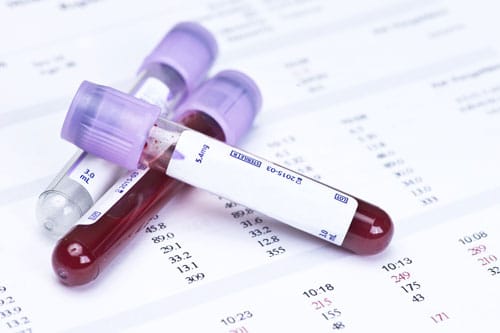
Understand Your Strands: Vitamin Deficiencies

Those suffering from thinning hair or loss may have a difficult time figuring out the cause. Many people have no answers as to why their hair is thinning. Wouldn’t it be great if you could get to the root cause of your hair loss?

Many times they are told it is simply genetic. While this may be a contributing factor, there can also be underlying causes, like vitamin deficiencies, that may be the reason for your hair loss. Often times, these specific vitamin deficiencies can be corrected to stop hair shedding. Here at HPIHair, we are now offering our AlopeciaDX blood test to target specific causes for your hair loss.

Certain vitamin deficiencies are quite common in today’s population. The American diet and lack of daily sunlight can take a toll on our overall health and vitamin levels. Specific vitamin deficiencies have been linked to weakened hair strands and hair loss.

Vitamins are needed within the cell process to grow new hair. If hair shedding is occurring and your vitamin levels are low, new hair growth is hindered. If the cells are deficient in vitamins they use an alternative source, which is often testosterone. Testosterone is converted to dihydrotesterone (DHT), which we know plays a vital role in hair loss. Without optimal vitamin levels, your hair will shed and growth will be inhibited.

Here at HPIHair, we are now offering our AlopeciaDX blood test to diagnose and help determine the specific causes for your hair loss.

Schedule your AlopeciaDX blood test and consultation today by calling 615.662.8722.

Alopecia DX Blood Test

Underlying medical Conditions

Experiencing hair loss can be a hard thing to deal with, but understanding the cause can be even harder. Many people have no answers as to why their hair is thinning. Wouldn’t it be great if you could get to the root cause of your hair loss?

Here at HPIHair, we are now offering our Alopecia DX blood test to target specific causes for your hair loss.

Underlying medical conditions can play a major role in hair loss. Often times, these medical conditions can go months or years without being identified. While there are many medical reasons that cause hair loss, the most common are anemia, thyroid disorders, and autoimmune diseases. These specific medical conditions can be recognized through a simple blood draw.

Blood Test

Every medical condition affects each person in different ways. Because of this, hair loss may be the only symptom or one of many. That is why diagnosing may be so difficult. If hair loss is the sole complaint, the person is often times led to believe it is simply genetics. Genetics may indeed play a role, but genetics are not the singular factor in determining hair loss. Often times there are multiple variables playing a role in hair loss, and understanding the cause can be the difference between losing more hair or stopping it.

Schedule your Alopecia DX blood test today by calling 615.662.8722 or complete our consultation form online. Read more about the Alopecia DX blood test available from HPIHair Partners.

New Year, New You & Hair Loss Solutions

If you’ve been seeing your hair thinning or experiencing hair loss, make it your New Year’s resolution to improve your confidence. By now, you’ve probably heard of us, but if you’ve not heard of HPIHair, we can help you achieve your hair restoration goals. Below we list our top solutions to stop hair loss and help with hair regrowth:

Non-invasive Treatments. Scalp injections and professional growth factors with microneedling can help with hair loss by using specific growth factors to initiate new hair growth.

Low Level Laser Therapy (LLLT). Our professional laser treatment, which contains 185 laser lights, can help stimulate blood and nutrient flow into the scalp. We also offer at home laser devices to use on the go and in the comfort of your own home.

Topical Treatments & Prescription Medications. Topical treatments like stimulating scalp treatments, growth serums, and strengthening serums help improve scalp health by ensuring healthy hair and promote a healthy environment for hair growth. Topical prescription medications, which can be customized to your needs, can be applied to areas of thinning or hair loss to support hair growth and minimize hair shedding. Our Replenology subscription offers you everything you need each month: a shampoo, conditioner, nutriment, and vitamins.

Supplements. HLCC Scripts Complete is an all natural multi vitamin that offers DHT-blocking properties along with essential vitamins for hair health.

Blood Testing. Help identify any nutritional or vitamin deficiencies and any underlying medical issues that may be contributing to your hair loss.

Hair Enhancements. We use 100% natural European hair to give you a natural look that can be washed and styled like your own hair.  

If you would like to learn more about our hair loss solutions please contact us today at 615.662.8722.

10 Facts About Women’s Hair Loss

Hair loss in women is actually very common, despite what many may believe. However, woman experiencing thinning hair may suffer in silence and female hair loss is often not discussed as prevalently as male hair loss. Because of this, you and many women feel alone and are not aware of how common this issue is.

Here are ten facts about hair loss and thinning in women:

  1. Hair loss affects women of all ages, ethnicities, and nationalities.
  2. Nearly 21 million women experience female pattern baldness.
  3. Women often experience diffuse hair thinning, commonly called androgenic alopecia.
  4. Most women dealing with hair thinning and loss are between the ages of 25-35.
  5. At the age of 35, hair density is changing and often times not noticeable until your 40’s or 50’s.
  6. Thinning of hair in 25% of women is caused by an increase in dihydrotestosterone (DHT).
  7. Women may also experience thinning or loss of eyebrows and eye lashes.
  8. 50% of women will have hair loss by the age of 50.
  9. Hair shedding from stress can be temporary, but 1 in 4 women who are predisposed to genetic hair loss, will not be able to re-grow hair.
  10. Menopause can cause hair thinning in up to 40% of women due to changes in hormones.

If you are experiencing hair thinning or loss call us at 615.662.8722. to discuss your treatment options.

Holiday Hair Stress

The holiday’s can be a very stressful time. Most people are aware that stress can take a toll on your mental well-being, but did you know that stress can also affect your hair? Often times stress and anxiety can cause hair loss, which may induce more stress initiating a vicious cycle.

Hair loss can be a complex issue. Stress and anxiety increase levels of cortisol in the body. The influx of cortisol may cause hormone imbalances and increase skin sebum production. The body’s supplies to maintain healthy hair and growth are diminished.

The American Hair Loss Association states that during this time your body does not supply the hair with the nutrients it needs and tells your hair in the growing and resting phase to shed. The increase in sebum also clogs the pores on the scalp, which obstructs hair growth. Because of this, it is important to maintain a healthy scalp for healthy hair. The hair loss is not an immediate reaction, and often times an individual will not experience hair loss or shedding until 6-12 weeks after the stressful event. In some cases, shedding may not begin until 3-9 months after the event.


With the holiday’s approaching, it is important to remember to take time for yourself and decompress–self-care during the holidays is extremely important. Ideas for stress relief include: meditation, yoga, or exercise. Eating a well-balanced diet and getting 7-9 hours of uninterrupted sleep each night can also help ward of stress and hair loss.

If you are experiencing an increase in hair loss this holiday season contact us at 615.662.8722.

Hair Today, Gone Tomorrow

Is PRP (Platelet Rich Plasma) For Me?

Are You A Good Candidate for Platelet Rich Plasma (PRP) Hair Treatment?

When we start considering the first steps of combating hair loss, there are so many options that it can be overwhelming as you try to decide which route to take! As each day passes, the hair loss world is revolutionizing and becoming broader, with more research leading to more knowledge. It’s a wonderful time for YOU – as a hair loss sufferer!

One procedure that has really made its way to the top of the market recently is Platelet Rich Plasma or PRP for short.  Sounds intriguing, but your next question likely is, “what in the world is PRP and how do I know if I am a candidate?!” Not to fret, passing along our knowledge and answering your questions is what this blog is all about!

Platelet Rich Plasma therapy (PRP) began over two decades ago in medical offices across a wide-range of rehabilitation therapy. PRP is now used in hair restoration for a natural way to restore stronger, healthier hair.  PRP hair restoration is suitable for both men and women. According to the article, Platelet-Rich Plasma in Androgenic Alopecia: Myth or an Effective Tool in the US National Library of Medicine National Institutes of Health PRP is an innovative and natural choice of therapy for quality hair restoration. Because of its use of the body’s own plasma, men and women of all age groups are ideal candidates for PRP hair treatments.

Based on the recent study’s results, the treatment is believed to work best on those who have viable hair follicles in a sub-healthy state that have fallen dormant due to the nasty DHT (dihydrotestosterone)! DHT is to blame for most hair loss and when testosterone reacts to the enzyme 5-alpha reductase.

HPIHair Partners is seeing great results & success in pairing our PRP treatments with our Low-Level Laser Therapy treatments for an added incentive to get those lazy hairs moving again!

HPIHair Partners has a team of Trichologist and hair loss specialist to help you sort through your clinical and holistic options for treatment. Visit our PRP page for more information and testimonials from our very own PRP clients!

Call us today to explore your options, (615) 662-8722.

Restore Your Confidence, get back to YOU!

Hair Today, Gone Tomorrow

Dealing with Hair Loss, Part 2

Social Acceptance

Socially, there are a lot of people who are teased or have been teased for hair loss.  As presented in the first post of this two-part hair loss series, stress can add to hair loss as well as lead to additional personal struggles–social ridicule makes the struggles with hair loss even harder.

People are often uneducated or naïve to the medical or genetic conditions that can cause hair loss. Studies show that 60% of men are teased for balding at some point in their lives. Hair loss often causes people to limit their social activities, causing them to stay indoors, and often retract themselves from others or the public in general. Surveys have also shown that around 40% of women with alopecia have had marital problems, and around 63% claimed to have career related problems, such as, limited opportunities for promotions or advancement.

Although all of this may come across as very discouraging news, the GOOD news is that we have great options at HPIHair in Nashville for those battling hair loss! Many people will often try in-home remedies such as, oils, hair masks, or over-the-counter vitamins to begin. Although we are certainly not opposed to this idea, most hair loss sufferers will need to seek professional screening and/or blood testing for a proper diagnosis before being able to know how or where to begin treating. We recommend starting with your local physician or dermatologist.

Available Solutions

We offer non-surgical solutions for men, women, children, adults, and seniors! These solutions include Low-Level Laser Therapy, DHT fighting products, scalp injections, growth factors, and customized enhancements! All of which have the capability of helping you look and feel like yourself again! Our focus is making every person feel the very best about themselves and we look forward to sending our clients out of our doors with restored confidence and with a renewed outlook on the day and life.

“And suddenly you just know…it’s time to start something new & trust the magic of beginnings.” -Meister Eckhart

Call us today to explore your options, 615.662.8722.

HPIHair Testimonials: Woman & Men tell their stories

Hair Today, Gone Tomorrow!

Dealing with Hair Loss

Have you ever wondered what you would do if you woke up one day and didn’t have your hair anymore? This is an unfortunate realization and struggle so many people face on a daily basis. Often, it’s not an overnight issue; however, that doesn’t make it any less traumatic. Sometimes people battle hair loss as early as infancy into latter adulthood.

According to The Hair Society, approximately 35 million men and 21 million women suffer from hair loss. Typically beginning at age 35, men have a 40% loss rate which increases to a 70% loss rate at age 80. However, women age 60 who experience hair loss will be in the 80% range.  Much of the world-wide population will lose more hair than they ever dreamed and they will need professional services to help them restore their hair.

Stress and Hair LossCould you imagine how that would make you feel? How would it affect your psychological behaviors, social life, relationships, self-confidence, or even your career path due to your physical appearance? It can really take a toll on people mentally & emotionally! It often causes people to stress, which may initially, or later, lead to impulsive behaviors to find the right “quick fix.” Here at HPIHair, we often consult with those about some of their very deep insecurities that they may have lived with for many years. Furthermore, we see many people who are affected by anxiety brought on by their hair loss. The fear of people knowing or noticing, just people looking in the general vicinity of the head will often make people extremely self-conscious. Depression is another well-known side-effect of hair loss.

According to EMedExpert, the discovery of hair loss is a stressful experience for both sexes, but substantially more distressing for women. Throughout the course of history attitudes towards baldness have been overwhelmingly negative. Living with alopecia areata, alopecia totalis, alopecia universalis, trichotillomania (compulsive hair pulling), or genetic hair thinning can be difficult in a culture that views hair as a sign of youth, beauty, and good health.

“Whether you are bald by [medical diagnosis, uncontrolled behaviors, genetics], or by choice, you are FABULOUS! It is the quality of the heart and soul that makes you, YOU! and that is a beautiful and special person.” – Bald & Fabulous

Call us today to explore your options, 615.662.8722.

Learn More About Hair Loss and HPIHair Solutions

BACK TO SCHOOL WITH BFRB & TRICHOTILLOMANIA

First and foremost, we’d like to thank our friends at The TLC Foundation for a great amount of information, tips, & tricks for our body focused repetitive behavior clients! Their newsletters, webinars, and resource lists are so very helpful for us and our trichotillomania community, and we’re grateful to have them as an outlet to better ourselves as well as our clients!

You may be wondering what BFRB is, and that is a body focused repetitive behavior. In our world, we deal with trichotillomania patients daily. Trichotillomania is a disorder that involves recurrent, irresistible urges to pull out body hair. People who have trich have the urge to pull out their hair, usually from their scalp, eyelashes, and eyebrows. Trichotillomania is a type of impulse control disorder. People with these disorders know that they can do damage by acting on the impulses, but they cannot stop themselves.

As you can imagine, having BFRBs can really be impacted by changes or certain activities that can trigger extra stress. Heading back to school certainly falls into the category of stress-related triggers!

“Most children with BFRBs experience some resumption of the behavior during the first quarter of the school year,” says TLC Scientific Advisory Board members.

Teens, college students, and adults with BFRBs may also experience increases in these behaviors as their schedules get busier & continues to fill up and add to the amount of pressure or stressors. TLC has come up with some great ways to cope with the anxieties of starting off a new school year on the right foot!

There are some great tools and resources for coping with BFRB, plus books, finger fidgets, and educational materials to help smooth the transition to a more hectic time of the year. Check out The TLC Foundation website for more information.

There is also a store at their website that you can purchase helpful tools such as Sensory-stimulating pencil grips, pens, and pencils to help kids in class by serving as school-friendly finger fiddles. There are toolkits offered with these items, along with soft and squeezable stress balls, snake bracelets, & spinner rings for the college level or adult level while at work.

We hope that this information will help you or someone you know with BFRBs to tackle the anxieties of back to school & enter this school year with calmness & confidence!

“The difference between school and life? In school, you’re taught a lesson and then given a test. In life, you’re given a test that teaches you a lesson.” ~Tom Bodett