Tag Archive for: Telogen Effluvium

Types Of Hair Loss In Women in Franklin, TN

Regain confidence with expert hair loss solutions for women.

For women, experiencing hair loss can be an emotionally challenging and distressing issue. Whether it’s thinning hair, bald patches, or a receding hairline, hair loss in women can have a significant impact on self-esteem and confidence. Understanding the different types of hair loss, their causes, and potential solutions is crucial in addressing this problem effectively.

Hair loss in women can be attributed to a variety of factors, including genetics, hormonal changes, medical conditions, and lifestyle choices. By identifying the specific type of hair loss and its root cause, women can take proactive steps to manage and potentially reverse the effects. At Franklin Hair Restoration, we specialize in providing personalized solutions for women experiencing various types of hair loss. Our team of experts is dedicated to helping women regain their confidence and achieve healthy, beautiful hair.

Female Pattern Hair Loss

Female pattern hair loss, also known as androgenetic alopecia, is the most common type of hair loss in women. This condition is characterized by a gradual thinning of the hair, typically starting at the crown or the top of the head. While male pattern baldness often results in a receding hairline, female pattern hair loss rarely causes complete baldness. Instead, women tend to experience overall thinning of the hair.

The underlying cause of female pattern hair loss is a combination of genetic predisposition and hormonal changes, particularly the influence of androgens such as dihydrotestosterone (DHT). While the exact mechanisms are still not fully understood, the gradual miniaturization of hair follicles and the shortened hair growth cycle contribute to the thinning of the hair over time.

Addressing Telogen Effluvium

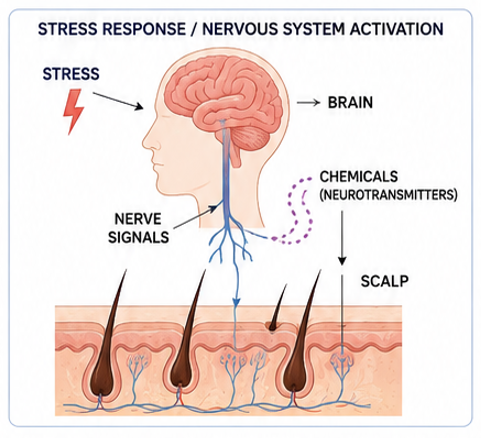
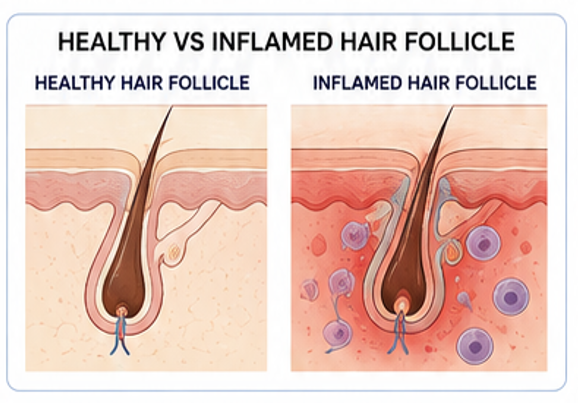
Telogen effluvium is a type of hair loss that occurs when a large number of hair follicles enter the resting phase of the hair growth cycle simultaneously. This can be triggered by various factors, including significant stress, hormonal changes, nutritional deficiencies, medication, or underlying medical conditions. Women experiencing telogen effluvium may notice excessive shedding and a noticeable decrease in hair density.

Identifying and addressing the underlying trigger for telogen effluvium is key to managing this type of hair loss. Our clinic offers comprehensive evaluations to determine the root cause of telogen effluvium in each individual case, allowing for targeted and effective treatment options.

Exploring Alopecia Areata

Alopecia areata is an autoimmune condition that causes hair loss in distinct patches on the scalp or other areas of the body. This type of hair loss can affect people of all ages, including women. The underlying cause of alopecia areata involves the body’s immune system mistakenly targeting hair follicles, leading to hair loss.

While the exact triggers for alopecia areata are not fully understood, it is believed to have a genetic component and can be influenced by environmental factors. Treatment options for alopecia areata may include corticosteroid injections, topical immunotherapy, or systemic medications to suppress the immune response.

Potential Solutions and Treatment Options

At Franklin Hair Restoration, we offer a range of personalized solutions and treatment options to address various types of hair loss in women. Our comprehensive approach emphasizes identifying the specific cause of hair loss for each individual and tailoring a treatment plan accordingly. Some of the treatment options available for women with hair loss include:

– Advanced hair transplantation techniques

– Platelet-rich plasma (PRP) therapy

– Low-level laser therapy

– Prescription medications

– Nutritional and lifestyle guidance

Our team of experts is dedicated to providing compassionate care and effective solutions for women experiencing hair loss, helping them reclaim their confidence and achieve beautiful, healthy hair.

End thoughts

Realizing the different types of hair loss in women is essential for effectively addressing this common concern. By identifying the specific type of hair loss and its underlying causes, women can explore personalized solutions and treatment options to combat the effects of hair loss and promote healthy hair growth.

At Franklin Hair Restoration, we are committed to empowering women with the knowledge and resources they need to address hair loss and achieve the results they desire. Our personalized approach and advanced treatment options are designed to support women on their journey to regaining healthy, beautiful hair.


Types Of Hair Loss In Women in Franklin, TN

Regain confidence with expert hair loss solutions for women.

For women, experiencing hair loss can be an emotionally challenging and distressing issue. Whether it’s thinning hair, bald patches, or a receding hairline, hair loss in women can have a significant impact on self-esteem and confidence. Understanding the different types of hair loss, their causes, and potential solutions is crucial in addressing this problem effectively.

Hair loss in women can be attributed to a variety of factors, including genetics, hormonal changes, medical conditions, and lifestyle choices. By identifying the specific type of hair loss and its root cause, women can take proactive steps to manage and potentially reverse the effects. At Franklin Hair Restoration, we specialize in providing personalized solutions for women experiencing various types of hair loss. Our team of experts is dedicated to helping women regain their confidence and achieve healthy, beautiful hair.

Female Pattern Hair Loss

Female pattern hair loss, also known as androgenetic alopecia, is the most common type of hair loss in women. This condition is characterized by a gradual thinning of the hair, typically starting at the crown or the top of the head. While male pattern baldness often results in a receding hairline, female pattern hair loss rarely causes complete baldness. Instead, women tend to experience overall thinning of the hair.

The underlying cause of female pattern hair loss is a combination of genetic predisposition and hormonal changes, particularly the influence of androgens such as dihydrotestosterone (DHT). While the exact mechanisms are still not fully understood, the gradual miniaturization of hair follicles and the shortened hair growth cycle contribute to the thinning of the hair over time.

Addressing Telogen Effluvium

Telogen effluvium is a type of hair loss that occurs when a large number of hair follicles enter the resting phase of the hair growth cycle simultaneously. This can be triggered by various factors, including significant stress, hormonal changes, nutritional deficiencies, medication, or underlying medical conditions. Women experiencing telogen effluvium may notice excessive shedding and a noticeable decrease in hair density.

Identifying and addressing the underlying trigger for telogen effluvium is key to managing this type of hair loss. Our clinic offers comprehensive evaluations to determine the root cause of telogen effluvium in each individual case, allowing for targeted and effective treatment options.

Exploring Alopecia Areata

Alopecia areata is an autoimmune condition that causes hair loss in distinct patches on the scalp or other areas of the body. This type of hair loss can affect people of all ages, including women. The underlying cause of alopecia areata involves the body’s immune system mistakenly targeting hair follicles, leading to hair loss.

While the exact triggers for alopecia areata are not fully understood, it is believed to have a genetic component and can be influenced by environmental factors. Treatment options for alopecia areata may include corticosteroid injections, topical immunotherapy, or systemic medications to suppress the immune response.

Potential Solutions and Treatment Options

At Franklin Hair Restoration, we offer a range of personalized solutions and treatment options to address various types of hair loss in women. Our comprehensive approach emphasizes identifying the specific cause of hair loss for each individual and tailoring a treatment plan accordingly. Some of the treatment options available for women with hair loss include:

– Advanced hair transplantation techniques

– Platelet-rich plasma (PRP) therapy

– Low-level laser therapy

– Prescription medications

– Nutritional and lifestyle guidance

Our team of experts is dedicated to providing compassionate care and effective solutions for women experiencing hair loss, helping them reclaim their confidence and achieve beautiful, healthy hair.

End thoughts

Realizing the different types of hair loss in women is essential for effectively addressing this common concern. By identifying the specific type of hair loss and its underlying causes, women can explore personalized solutions and treatment options to combat the effects of hair loss and promote healthy hair growth.

At Franklin Hair Restoration, we are committed to empowering women with the knowledge and resources they need to address hair loss and achieve the results they desire. Our personalized approach and advanced treatment options are designed to support women on their journey to regaining healthy, beautiful hair.
COVID-19 Hair Loss Post Recovery

According to the American Academy of Dermatology, some patients experience hair loss 2-3 months after recovering from COVID-19. Telogen Effluvium is a temporary form of hair loss. It increases the number of hair follicles in the telogen (shedding) phase by more than 50%. Those who experience telogen effluvium show signs 2-3 months after a traumatic event, like the COVID-19. Researchers believe the “shock” the virus has caused to the body’s immune system is causing this hair loss post recovery. The virus itself may not be causing the hair loss, but the stress and trauma it wreaks on the body is the culprit. 

Telogen Effluvium Caused By COVID-19 

Telogen effluvium is debatably the second most common form of hair loss in both men and women. Other forms of hair loss manifest in concentrated parts of the scalp. Telogen effluvium appears as a diffused thinning all over the scalp. Typically, the crown loses more hair than the sides and back of the head. The hairline is not usually impacted. Telogen effluvium does not cause total and permanent hair loss. 

Understanding TELOGEN EFFLUVIUM Hair Loss Post COVID-19

In order to understand telogen effluvium, it is best to first have a understanding of how a “normal” head of hair works. The average person has 120,000 to 150,000 strands of hair on the scalp, and sheds an average of 100 hairs a day. These hairs shed following a resting period of three to four months, after a several-year-long growth cycle is complete. Different hairs are in different stages of the growth cycle at different times. However, if you suffer from telogen effluvium a disproportionate number of hair follicles shift suddenly into the resting (catagen) stage. This usually results in the shedding of a large number of hairs within a short period of time. 

Causes: 

Treatment for Hair Loss Post COVID-19

The treatment for telogen effluvium can depend on the cause. Most cases of telogen effluvium can be waited out, as they will resolve themselves.

Treatment options may include:

*A multi-therapeutic approach will always be the best option to help the scalp and hair return to normal.

PepFactor Scalp

PepFactor Scalp is an advanced scalp and hair health treatment formulated with the world’s first and ONLY authentic basic fibroblast growth factor (bFGF) combined with Copper Peptides. This natural formulation works to offer regenerative properties for hair regrowth. Pepfactor works quicker than other growth factor or plasma treatments. This treatment stimulates collagen and heals tissue surrounding the hair follicles, which in turn improves hair and scalp health to regenerate hair. Most patients see results within the first few weeks after the first treatment. Results are best when done in a series and results may vary between individuals.  

Understanding Telogen Effluvium

What is Telogen Effluvium? An Overview

Telogen effluvium (TE) is one of the most commonly diagnosed hair loss conditions among dermatologists. TE is described as a form of non-scarring alopecia, which is characterized by temporary diffuse hair loss. Diffuse hair loss is seen throughout a large area of the scalp with symmetrical thinning.

In the majority of cases, TE is sudden and acute. Acute TE is defined by shedding of less than 50% of the hair on the scalp for less than six months. Shedding that occurs greater than six months is considered a chronic condition. Those affected by TE do not entirely lose all the hair on their scalp, but rather the hair in certain areas becomes progressively thinner. While TE can occur throughout any area on the scalp, the top and crown are most commonly affected. Only in rare chronic circumstances is there advanced recession of the hairline.

Woman Grabbing Her Hair

PHYSIOLOGY

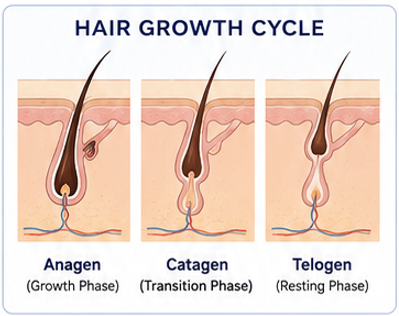
To better understand telogen effluvium, knowledge of how the hair cycle works is necessary. There are three phases in the hair cycle: anagen, catagen, and telogen. The anagen phase, or growing phase, can last up to two to seven years. This is why some people can grow their hair long, while others say it stops growing at a certain point.

During the catagen, or transition phase, the hair follicle is reduced in size cutting the hair shaft off from the blood supply. The last phase is telogen, or resting phase. At any given time, 5-15% of hair is in the telogen stage, which typically lasts from three to five months.

During this final stage, the hair no longer has access to the blood supply and is not growing. Because the hair is not supplied with blood and nutrients, the bulb becomes fully keratinized. Although the hair is technically dead, it is held in place by skin cells. Late in this phase, a new hair follicle begins to forms and the old hair is shed. Each hair follicle is continuously in a different stage at any given time. If all of the hair cycled at the same time it would be lost all at once.

CLINICAL PRESENTATION

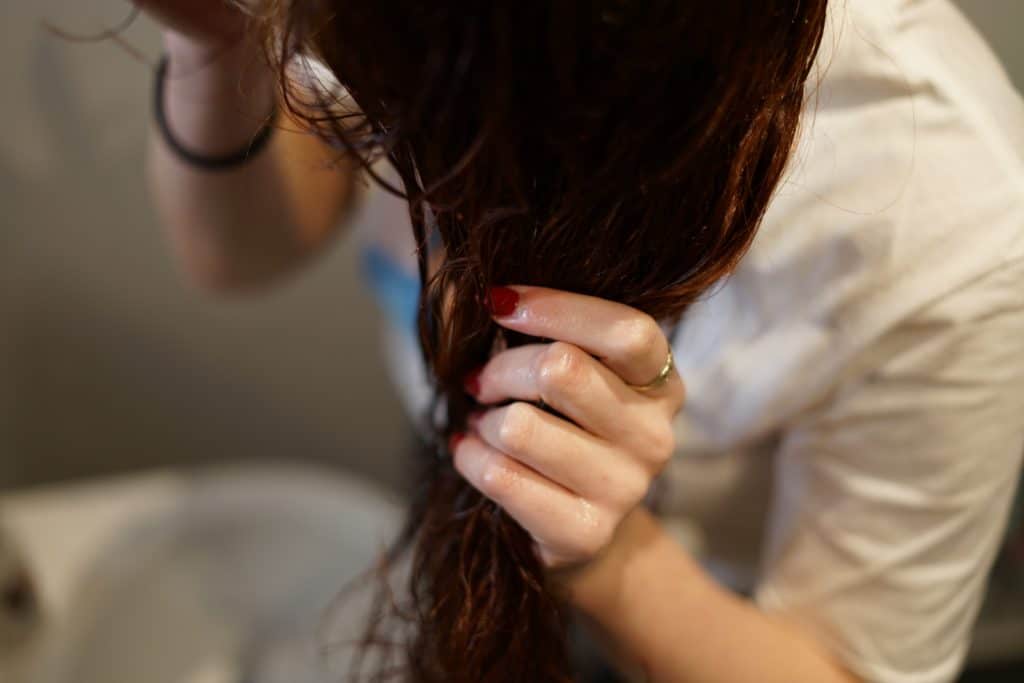
Hair loss from TE is diffuse and uniform. The hair loss may also be acute or progressive. TE can be triggered by events 2-4 months prior to shedding. Shedding is typically increased after shampooing or brushing. Reports of shedding may be as many as 300 hairs per day. In severe cases of TE, the eyebrows, axillary, and pubic areas will also be affected. Typically there are no other associated symptoms.

DIAGNOSIS OF TE

Primary care providers often refer to dermatology in cases of TE. The dermatologist will inspect the scalp to rule out any fungal or bacterial infection. In TE, the scalp may exhibit a higher number of short new hairs growing and the duration of the shedding can be measured based on the approximate rate of hair growth, which is approximately 1cm per month.

A thorough past medical history and hair-pull test are most commonly used to diagnose TE. A scalp biopsy can confirm the diagnosis of TE, but is often not necessary. The patient is instructed to not shampoo hair for up to 24 hours prior to the hair pull test.  A hair pull test is conducted by grabbing a small amount of hair with gentle, but firm, pressure in four different areas of the scalp. A negative hair pull test results in less than 10% of hair pulled, typically about four to six or fewer hairs. If more than 10% of hair pulled is shed then it is considered active shedding. If 25% of the extracted hairs are in the telogen phase, the diagnosis of TE is confirmed. Hairs in the telogen phase are obvious by the lack the gelatinous hair sheath and a white bulb present at the base.

CAUSES

  • POST PARTUM – During pregnancy, the increase of estrogen triggers the hair to stay in the growth cycle longer. This causes minimal hair shedding and gives the appearance of thick, full hair. Acute TE develops one to five months after birth due to the dramatic shift in hormone levels. TE occurs in over 50% of post partum females. The shedding may be significant, but in most cases women quickly begin to regrow hair.
  • STRESS – Stress is the leading factor for developing TE. Stress can be either emotional or physical. Emotional stresses like anxiety and depression have been linked to acute and chronic TE. Physical stress like surgery, illness, and physical trauma also play a large roll in developing TE. Often times, hair shedding will not be seen until three to six months after a stressful event.
  • DIET – A diet lacking in proper intake of proteins, vitamins, and minerals can cause TE. Extreme dieting or a poor diet starves the body, and the hair, of the nutrition it needs to flourish. While the body is in starvation mode, the nutrients are used for other vital functions in the body. This action sends the hair follicles into shock causing them to go dormant and eventually fall out.
  • MEDICATIONS – Many medications have hair loss listed in their side effect profile. The most common medications linked to TE are: hormones (contraceptive and hormone replacement therapies), blood thinners, anti-hypertensives, antidepressants, mood stabilizers, thyroid medications, and steroids. It is important to discuss hair loss with your primary care provider before starting or stopping any medications.

TREATMENT OF TE

In the majority of TE cases, no treatment is necessary. Hair regrowth often occurs on its own after the underlying factor concludes. The best way to combat TE is to be proactive. Eating a well-balanced diet of whole grains, lean proteins, fresh fruits and vegetables will supply your body and hair with the vital nutrients it needs. Supplementation of a high quality vitamin can also help ensure proper nutritional values are being met. Activities to relieve stress should be practiced daily. Activates like yoga, meditation, or exercise can be great stress relievers. Proper hydration with water and a good nights sleep is also key to reducing stress.

In some cases, a dermatologist may recommend that medication is necessary to get TE under control. If needed, a topical medication called minoxidil can be prescribed. Minoxidil will be applied directly to the thinning areas of the scalp. Once the underlying cause of TE is identified and reversed then minoxidil can be stopped. If the trigger for TE cannot be rendered then minoxidil is needed until the underlying factor is identified and eliminated.

Once the underlying factor is eliminated, an active approach is beneficial to speed up the hair regrowth. Therapies like low-level light therapy and scalp injections have shown promise in regrowing hair. These therapy options can be used individually or together for the most promising results.

CONCLUSION

While TE can be worrisome, it can also be managed. The key is to play a proactive role in your health. Reducing stressors, eating a well-balanced diet, and having open communication with your primary provider or dermatologist are all solutions in combating TE. Whatever the cause of hair loss from TE, it is fully reversible. The hair follicle itself is not permanently damaged and the hair will eventually grow back.